
BLOG / SOCIAL · 6 min read
Syntri Labs · July 2026
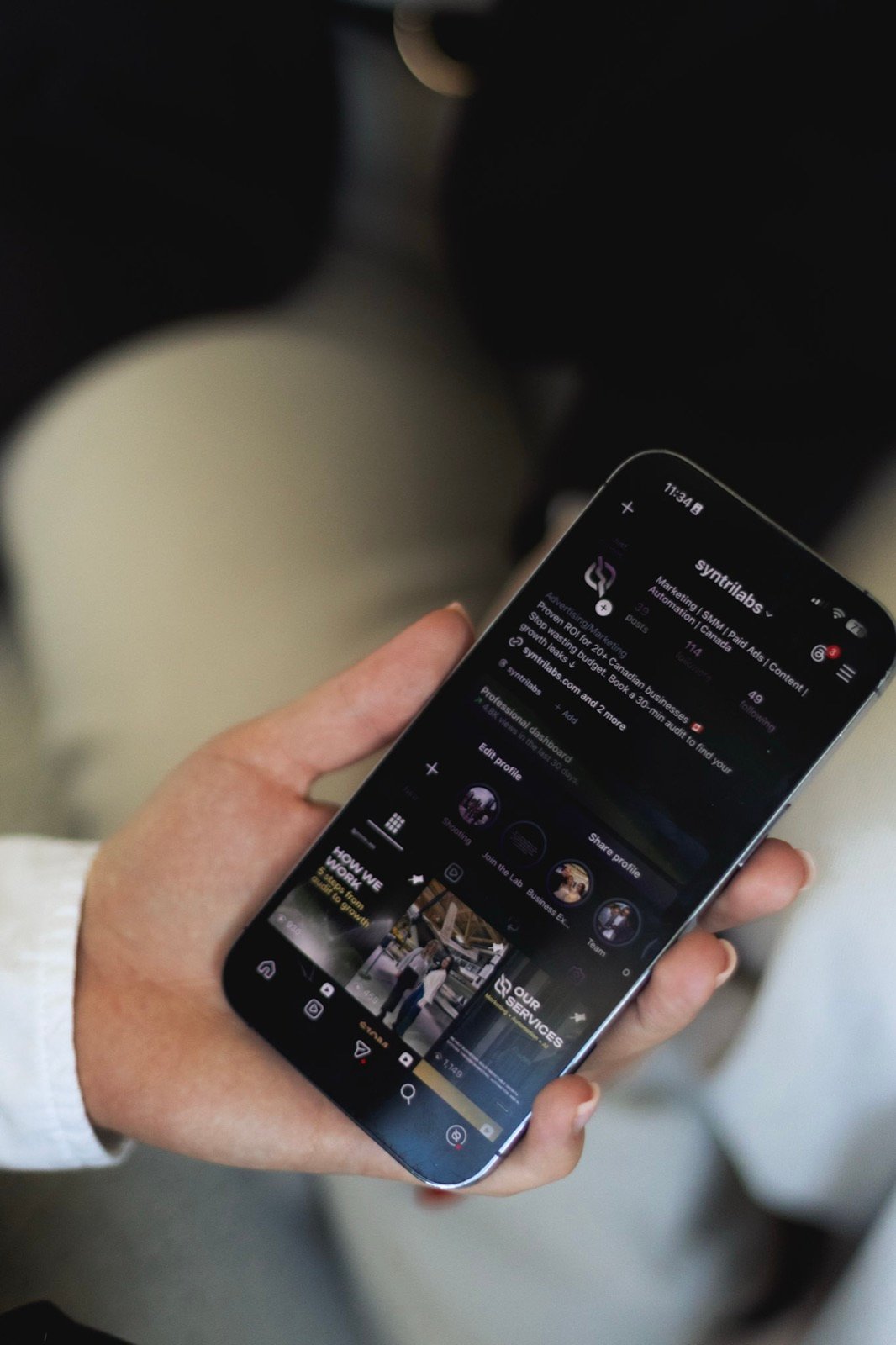
If you sell sneakers, Instagram shows the sneakers. If you sell brow work, injections, physiotherapy, or financial advice, there is nothing to photograph — the product is the decision to trust you with something personal. Your face, your hands, your way of explaining things. That changes everything about how the account should work.
A trust buyer is not comparing products; they are auditioning a person. Stock photos and template quotes fail that audition instantly. Everyone has seen the same smiling model on four other clinics' pages. A slightly imperfect video of the actual practitioner talking, working, answering a common fear ("does it hurt?", "what if I'm denied?") does what no design can: it lets the client rehearse the appointment before booking it. By the time they message you, half the sale is done.
The ratio matters as much as the pillars. Accounts that are all proof feel like a brochure; all education, like a free helpdesk nobody thinks to hire; all person, like a diary. Rotate deliberately, and let the uncomfortable questions lead. The post that answers "what can go wrong with this procedure" earns more trust than ten posts saying everything always goes right, because it sounds like someone who has actually seen both outcomes.
Reels are the only format that reliably reaches people who don't follow you yet, which makes them the growth engine for any trust business. The proof we point to is Larisa Belikova, an insurance and financial advisor: a weekly Reels engine took her from 5.5K to 595K monthly views (108×) in 12 months, and from 391 to 4,095 followers, with $0 in ad spend. Insurance. The least "visual" product imaginable, sold entirely on a real person explaining things clearly, week after week.
The word that matters in that sentence is weekly. The realistic consistency math is 3–5 posts a week, every week, for months, because the algorithm rewards rhythm and buyers reward familiarity. Post daily for two weeks and vanish for one, and both resets. Most owners can produce at that pace for about three weeks around their actual job; that is normal, and it is why this is a system problem, not a willpower problem. It is also exactly what our social media service is built to solve: batch filming, a content calendar, and publishing that doesn't depend on anyone's free evening. One filming day, properly planned, can cover weeks of posts. The practitioner gives hours, not evenings.
We have run social media and Meta ads for Diamond Beauty Centre YYC for two years now, a beauty business where every client is trusting someone near their face. What that partnership taught us is that trust content compounds slowly and then all at once: months of consistent proof and education become the reason a new client says "I feel like I already know you" in their first message. That sentence is the entire return on investment. It just never arrives in week two, which is why the businesses that win on Instagram are rarely the most photogenic ones. They are the most consistent ones.
One honest caveat before you invest here: Instagram amplifies a service worth trusting; it cannot manufacture one. If your reviews are shaky or your delivery is inconsistent, a bigger audience just finds out faster. Fix the service first. Then put a real face on it, keep the rhythm, and let the account do what it does best — turn strangers into people who feel they already know you.
Selling trust and posting into silence? Let's look at what a consistent engine would take for your business.
Book a growth review →More from the blog: all articles →